

In the opulent world of Swiss luxury watches, the phrase “Swiss Made” carries a rare kind of weight. It evokes hand-polished perfection, old-world mastery, and a storied tradition of mechanical excellence. It is, in many ways, the bedrock of global trust in high-end horology. But ask a watch industry insider what “Swiss Made” really means, and you might get a sigh before you get an answer. While I have already written about this topic in the past, it has become particularly relevant once again due to all that wonderful, and often misunderstood, tariff-talk as of late…

Because behind that prestigious label lies a truth both more complicated, and more pragmatic, than most consumers realize (except of course our loyal readers). While the mechanical movement at the heart of your timepiece may indeed be Swiss, the bracelet on your wrist, the case that wraps the watch, and even the crystal that shields the dial may have been born far from the Alps. In many cases, they were likely crafted in Asia or Eastern Europe.
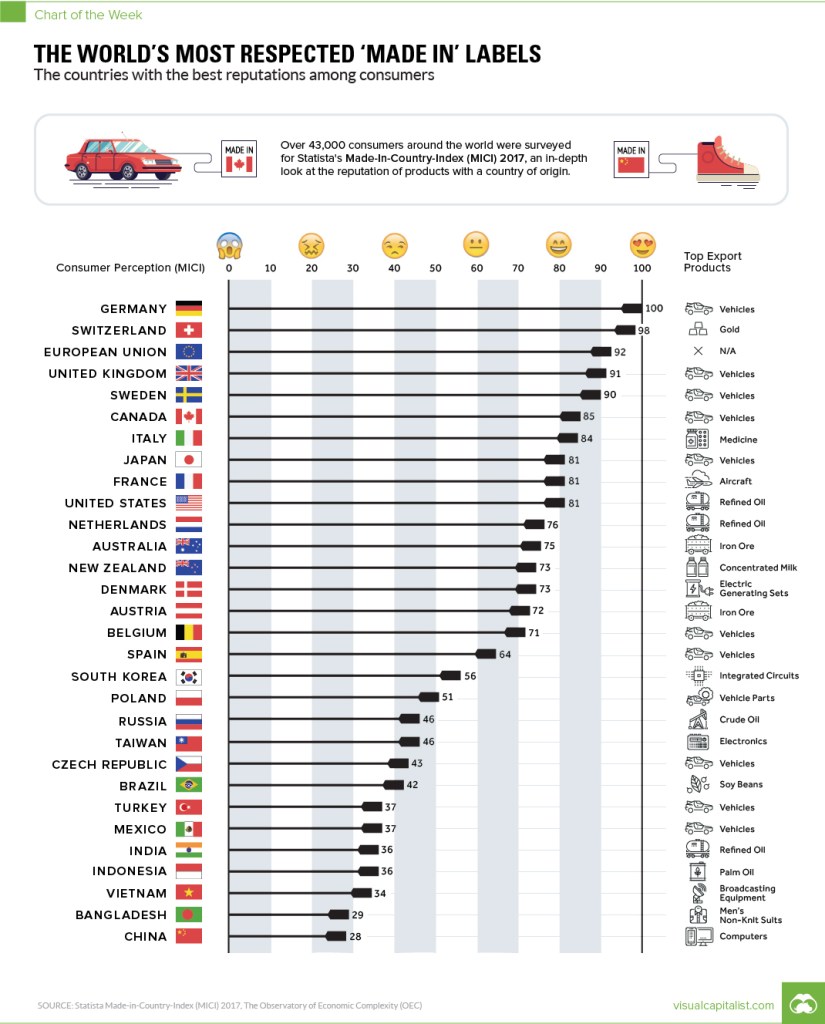
Under current Swiss law, a watch qualifies as “Swiss Made” if 60 percent of its manufacturing cost is generated in Switzerland, the movement is Swiss, the watch is assembled and cased in Switzerland, and final inspection occurs on Swiss soil. The law doesn’t require every part to be manufactured domestically. It requires that enough value is added domestically. Feel free to have a look at our previous illustrated video on this topic. In a globalized manufacturing landscape, that legal distinction has opened the door for an industry that is still absolutely Swiss in spirit and branding, while being, in many cases, only partly Swiss in physical origin.

Take the sapphire crystal, used in virtually all luxury watches today. It’s a synthetic material, grown under high-pressure furnaces, and produced at enormous scale in China and Germany. Switzerland does manufacture sapphire crystals, but many Swiss brands source from abroad due to cost efficiencies. The same is true for bracelets, which are complex and labor-intensive to produce. For brands in the mid-luxury tier, outsourcing bracelet production to Asia is nothing exceptional at all, it is standard practice. Case blanks, the unshaped metal chunks that eventually become polished cases, are also often milled overseas before being machined and finished in Switzerland.

These realities don’t invalidate the quality of the watches, but they do raise an uncomfortable question: How Swiss is a Swiss watch, really? The answer varies dramatically depending on the brand. Which of course, is no fun for the true Swiss Made watchmakers out there, as they are thrown in the same group as the other Swiss Made watchmakers that offshore significantly.
Many household names in Swiss watchmaking, assemble their watches in Switzerland using a mix of Swiss and foreign parts. So rather than Swiss made meaning Made in Switzerland, it would help if you reframed that mentally as meaning “Assembled in Switzerland” for the majority of Swiss Made watches you see out there. They are fully compliant with Swiss law, and these timepieces pass the necessary quality standards. But the actual percentage of Swiss content in those watches may hover just above the legal 60 percent mark.

This is im my view, to the detriment of the true Swiss Made watchmakers. For independent maisons like Patek Philippe, Audemars Piguet, and brands such as Laurent Ferrier, Akrivia, Moser&Cie, or Philippe Dufour. These watchmakers tend to manufacture or source locally, often with a traceable supply chain and obsessive attention to in-house finishing. Their scale is smaller, but their Swiss content is often well above 90 percent. So why does this matter?

Because in an era of global supply chains and vague marketing, the “Swiss Made” label risks becoming diluted, not in legal terms, but in meaning. Consumers associate the label with an ideal: one of artisanal skill, local craftsmanship, and a heritage that cannot be reproduced elsewhere. When a watch meets only the minimum legal threshold but is marketed with the full force of Swiss luxury, it creates a gap between expectation and reality.

The Swiss watch industry has argued, fairly, that globalization is essential to remaining competitive. Producing 100 percent Swiss content for every component would make most watches prohibitively expensive. I invite you to watch our lengthy interview with Jean-Claude Biever, who touches upon the subject here. Brands must balance heritage with economic reality.
At the heart of this debate is an industry trying to protect its most valuable asset: trust. “Swiss Made” isn’t just a label. It’s a promise, of history, precision, and integrity. The more that promise is bent by legal technicality or supply-chain convenience, the more the industry risks devaluing what has made it unique.
Begun, the trade wars have... impact your watch price, they shall