


In the world of luxury watches, few companies have shown as much ambition over the past couple of years than Watches of Switzerland Group PLC. Once a relatively niche player in the high-end watch retail space, the UK-based group surged into the spotlight with an aggressive expansion strategy, capturing both market share and investor attention. But after years of steady rise, recent turbulence has cast a shadow not only on its own prospects but also on broader questions surrounding the global luxury watch industry.

These past few years, Watches of Switzerland has ridden the wave of a resurgent appreciation for mechanical watches, driven by both status-conscious consumers and a growing subset of enthusiasts who view horology through the lens of craft, heritage, and even alternative (albeit speculative) investment. While I’m not constantly monitoring their performance, I do check in from time to time since they are such a public (you can actually read their earnings!) and such a high-profile player in the world of watches.
Watches of Switzerland has enjoyed a privileged status as an authorized retailer for many of the world’s most coveted brands, including Rolex, Patek Philippe, and Audemars Piguet. Most AD’s will praise Heaven if they can have just one of these big name brands in their dealership. Watches of Switzerland has all of them. These extremely coveted and increasingly rare relationships are not only commercially valuable but also strategically protective. Talk about a moat! Warren Buffet would approve. Authorized dealerships have become increasingly rare, as high-end Swiss manufacturers seek tighter control over their retail channels. By aligning itself with the most prestigious names in the business, Watches of Switzerland erected a robust moat against competition, enabling it to expand confidently both online and across brick-and-mortar showrooms in North America and Europe.
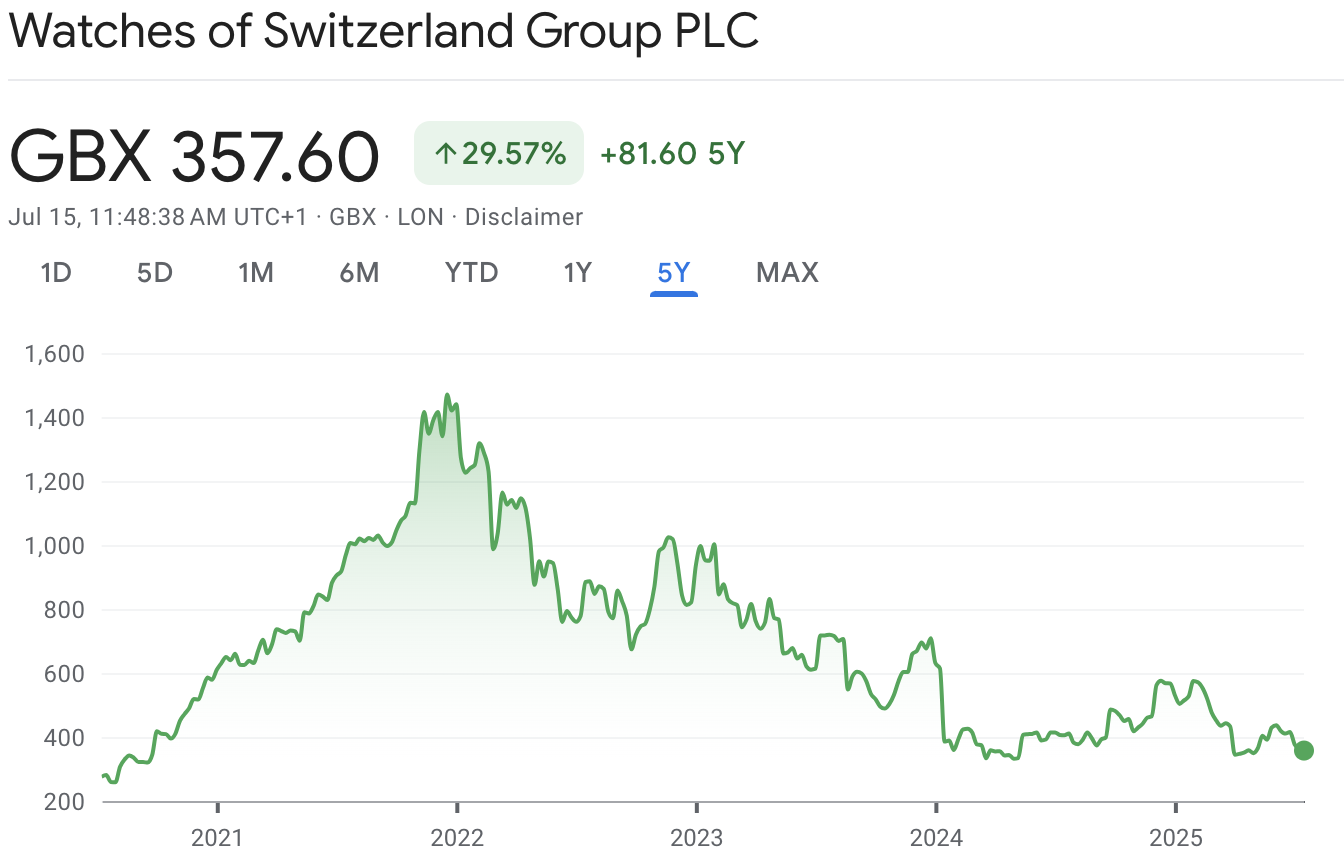
Looking at the past couple of years, is quite an interesting ride however. That is of course because of the changing landscape that is the world of watches. In its fiscal year ending April 2020, the company posted revenues of £819 million. By FY2023, that figure had surged to £1.54 billion, marking an impressive compound annual growth rate of over 16%. Earnings followed suit. Net income rose from modest beginnings to £122 million in 2023, supported by consistently healthy operating margins, a carefully curated brand portfolio, and strategic geographic diversification, particularly into the United States.

Yet by 2024, the tide began to shift. In a sharp contrast to the high watermark of 2023, the company saw its net income drop precipitously by more than 50% (!) falling to £59 million. Why though? Inflationary pressures in the UK, a weaker macroeconomic environment, and persistent consumer caution created headwinds across the domestic retail sector. At the same time, US expansion encountered a new obstacle: tariffs on luxury imports, which dented margins even as American sales volumes continued to climb. This is, of course, nothing unique to Watches of Switzerland. However, what is great here is that they are a listed company, basically focused on… watches.. so we can try and get a better view on what is actually happening in the industry.

The group’s fiscal 2025 results brought a glimmer of recovery. However, full-year earnings are projected to fall slightly again to around £54 million, keeping the company well below its previous earnings peak. Having once traded at (grossly) elevated price-to-earnings multiples, reaching as high as 272 times in earlier years, Watches of Switzerland has since settled into more sustainable territory, currently priced around 15.5 times trailing earnings. Focus should now logically be on execution, efficiency, and resilience.
As said above, these developments do not exist in a vacuum. The challenges and opportunities faced by Watches of Switzerland are indicative of larger forces at work in the luxury watch industry. After enjoying an extraordinary post-pandemic boom the industry now appears to be entering a phase of recalibration. Swiss watch exports have remained strong in absolute terms, but growth has moderated. Consumers are more discerning, and the secondary market, once borderline-insane and speculative, has cooled significantly from its 2022 highs.
With the days of effortless growth likely behind us for now, I would not be surprised if we see further consolidation within the industry as it tries to reinvent itself once again.
To be clear, this is a watch blog and this article is not financial advice!
The Watch Retail Giant's Changing Tides