


For what seemed forever, Baselworld stood as the high altar of the watchmaking world. Every spring, the industry converged on the Swiss city of Basel in a ritual as regular and precise as the tourbillons ticking inside the displays. Brand executives, retailers, journalists, and collectors from every corner of the globe would walk the cavernous Messeplatz halls, shake hands over velvet-lined trays, and marvel at novelties unveiled beneath spotlights. Baselworld was not merely a trade fair; it was the central nervous system of the global watch business. Its fall, long anticipated but still shocking when it finally came, left a void the industry is still struggling to fill. Yes, I, too, miss Baselworld.

Baselworld’s collapse didn’t come all at once. It began quietly, with frustration. For years, brands complained about the soaring costs of exhibition booths, the slow pace of digital modernization, and the heavy-handed governance by the fair’s organizer, MCH Group. When the Swatch Group, then one of the show’s major anchors, abruptly pulled out in 2018, it sent a clear message that the balance of power was shifting. The final blows came swiftly. Rolex, Patek Philippe, and LVMH brands followed suit, and the show, once bustling with over 100,000 visitors, was effectively over.

Baselworld’s demise signaled something deeper: the end of centralized horological authority. The fair had become emblematic of an industry rooted in tradition but resistant to change. It was a glittering monument that forgot who it served and failed to keep pace with a world increasingly defined by speed, digital fluency, and consumer-driven dynamics.

In the years since, the watch industry has entered a period of fragmentation, improvisation, and reinvention. What once existed under one vast roof now exists in pieces. Some of those pieces are polished and tightly managed, like Watches & Wonders Geneva, the new crownCrown The knob on the outside of the watch that you typically use to either wind the mainspring or set the time [Learn More] jewelJewels Watch jewels are small, synthetic sapphire or ruby bearings that are used in mechanical watches to reduce friction and wear on moving parts. They are typically made from corundum. They are used as bearings for a.o. the pivots to reduce friction. [Learn More] of the Swiss fair calendar, backed by Richemont and featuring names like Cartier, IWC, and Jaeger-LeCoultre. The event, held at the Palexpo center each spring, offers a sleek, highly curated environment more akin to a luxury showroom than the controlled chaos of Basel. Press coverage is orchestrated to the minute. Embargoes are rigid. For some, it feels like a necessary evolution; for others (myself included), a little too clinical.

Meanwhile, Geneva Watch Days has emerged as a counterpoint, informal, decentralized, and more personal. Hosted across luxury hotels and brand boutiques, it allows independent watchmakers and niche brands to showcase their work without the burden of massive exhibition costs. It also lets retailers and collectors see watches in a setting more akin to how they’ll be sold. There is a freedom to Geneva Watch Days that many find refreshing, but it lacks the gravitational pull that Basel once offered. The entire industry no longer moves as one.
This decentralization mirrors broader trends in luxury. In the past, watches were unveiled behind closed doors, shared with retailers first, then press, and finally with the public. Today, watches essentially debut on Instagram, in YouTube videos, or via livestreams from Le Locle or Tokyo. Collectors often see releases at the same time as journalists. Microbrands, operating outside traditional channels, crowdfund entire product lines with nothing more than CAD renderings. The internet has collapsed the old hierarchy of access.
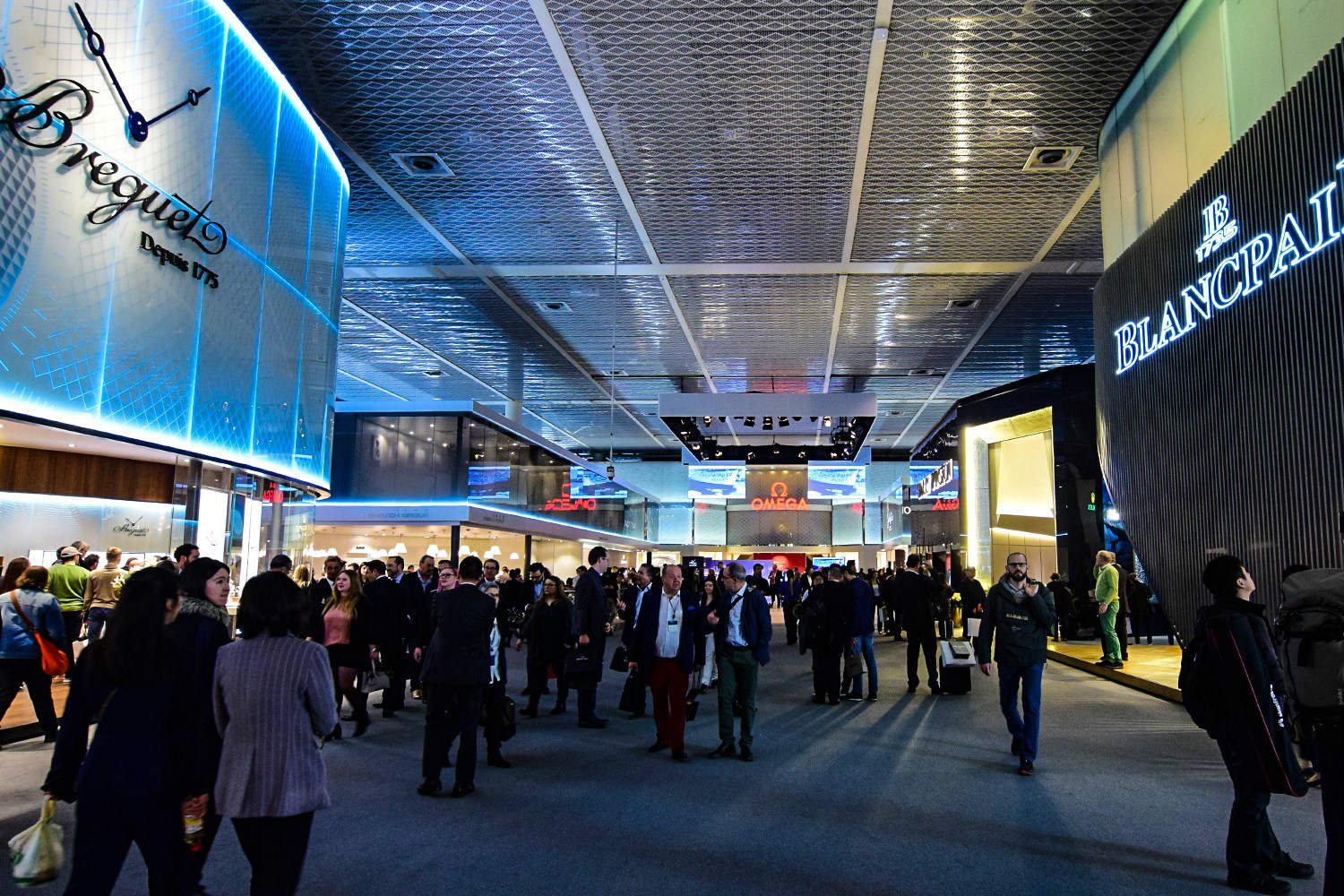
Yet the dissolution of Baselworld has not only fractured the Western calendar. It has also created an opening for regions long treated as peripheral by the traditional Swiss-led fair circuit. Asian watch shows, once seen as satellite events, have grown in importance and confidence. The China Watch & Clock Fair in Shenzhen, for example, is now one of the largest in the world by attendance. While it may lack the prestige and polish of Geneva, it reflects the scale and dynamism of the Asian market. Dubai Watch Week, backed by the Seddiqi family, has become a thoughtful, invitation-only event that mixes collectors, journalists, and independent makers in panel discussions and intimate presentations. These shows are not just regional showcases; they are redefining how, and where, the global watch conversation happens. The center of gravity is slowly, and quietly, shifting.
In the absence of a single industry summit, brands now craft their own strategies. Some host private showroom events in Beverly Hills or Dubai, flying in top clients for curated experiences. Others rely on a constant stream of digital drops, engaging a global audience directly, with specific watch journalists (influencers) acting as their de facto marketing department. This transition has been liberating for some and disorienting for others. The coherence of a unified calendar is gone. What remains is a patchwork of stages, some physical, some virtual, each catering to different corners of the market. Not to mention, the average watch enthusiast’s travel expenses have gone up significantly, due to having to visit not one but several watch events each year…
For the traditionalist, the loss of Baselworld is still mourned. It was flawed, yes, but it was also magical. It was the one place where a novice collector and a CEO might share an espresso over a new GMTGMT A GMT (Greenwich Mean Time) complication is a feature found in some watches that allows the wearer to track two time zones simultaneously. It typically includes a 24-hour hand and a bezel or a second hour hand that can be adjusted independently of the main hour hand to track the time in a different time zone. [Learn More] complication (true story). It was where relationships were built in handshake deals and midnight dinners (also a true story). It had scale, weight, and memory. The new model is lighter, more agile, and in some ways more democratic, but also more… whatever? A watch unveiled on Instagram may draw thousands of likes, but it rarely lingers in the mind the way a physical encounter once did. But maybe it’s just me, and I’m simply… getting old?
The question that lingers now is whether the watch industry needs a new cathedral, or whether the future lies in a constellation of smaller, more nimble temples. Is cohesion something to be preserved, or has the world moved on and I’m just missing the good old days? Or am I simply basking in nostalgia here on this early Monday morning, thinking “everything was better back in my day”?
When The Machines Raged Against The Machine