
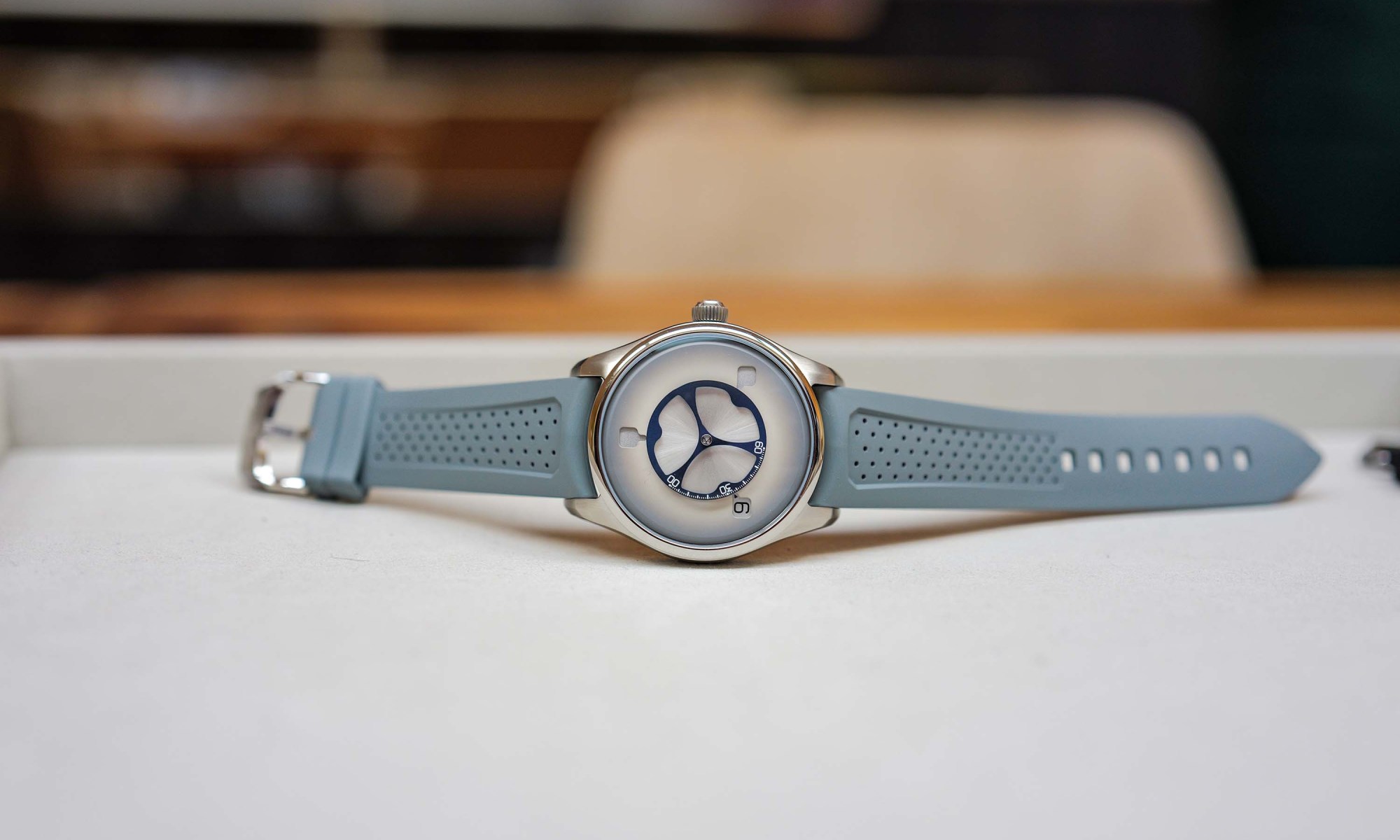

The new H. Moser & Cie. Pioneer Flying Hours in steel with a White Fumé dial is unlike any other watch I’ve worn. It takes the rugged, everyday Pioneer case, 120m water resistance, screw-down crownCrown The knob on the outside of the watch that you typically use to either wind the mainspring or set the time [Learn More], tough steel, and pairs it with one of the more fascinating complications in modern watchmaking: flying hours. All the details, right here in this hands-on video review:
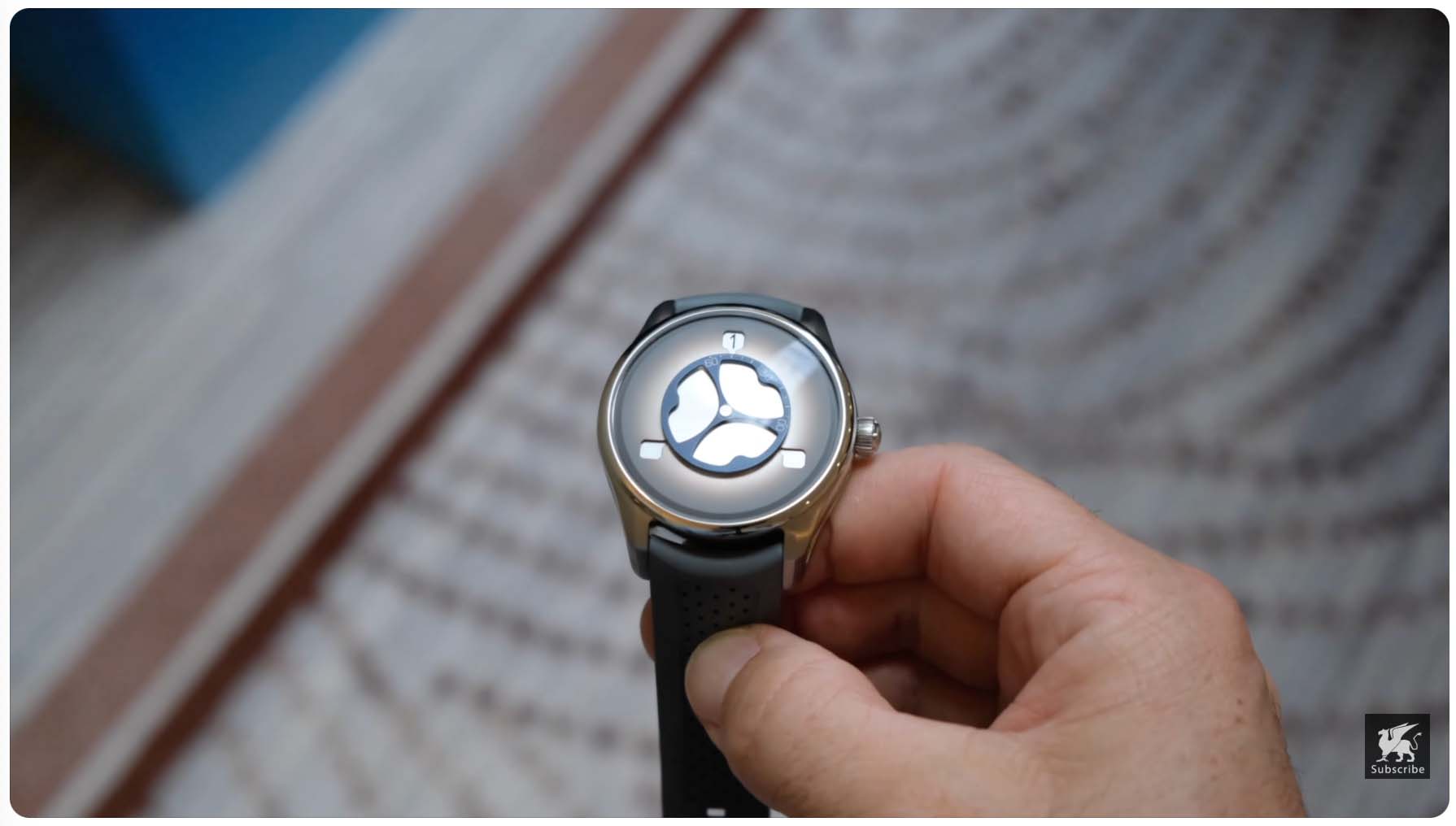
Instead of an hour hand, three satellite discs rotate beneath the dial. At the top of each hour, one disc jumps instantly into position while a skeletonizedSkeletonizing A decorative technique that involves removing some of the material from the movement parts to create a see-through effect, often used on the plates and bridges. [Learn More] central minutes disc sweeps across a 120-degree arc. Inside beats the in-house HMC 240 calibre, with a 72-hour power reserveRéserve de marche Also known as Power Reserve. A watch's power reserve refers to the amount of time a mechanical watch can run without being wound. The power reserve of a mechanical watch can vary depending on the size of the mainspring, the efficiency of the gear train, and the rate at which the mainspring releases energy. If a watch has a Power Reserve 'complication' it simply means that the status of the power reserve can be seen on the watch itself (either on the dial or movement side of the watch). [Learn More], Straumann hairspringHairspring The hairspring is a thin spring in a mechanical watch movement that is connected to the balance wheel. The balance wheel oscillates back and forth at a consistent rate, and the hairspring helps regulate these oscillations. The hairspring works by applying a restoring force to the balance wheel, which helps to keep the balance wheel oscillating at a consistent rate. The hairspring is also known as a balance spring. [Learn More], and flat overcoil for precision.
It’s built to be reliable, wearable, and seriously fun.